Promoting Healthy Lifestyles and Social Responsibility Through Community Engagement: A Reflection on the Charity Fun Run 2025 Programme
Promoting Healthy Lifestyles and Social Responsibility Through Community Engagement: A Reflection on the Charity Fun Run 2025 Programme
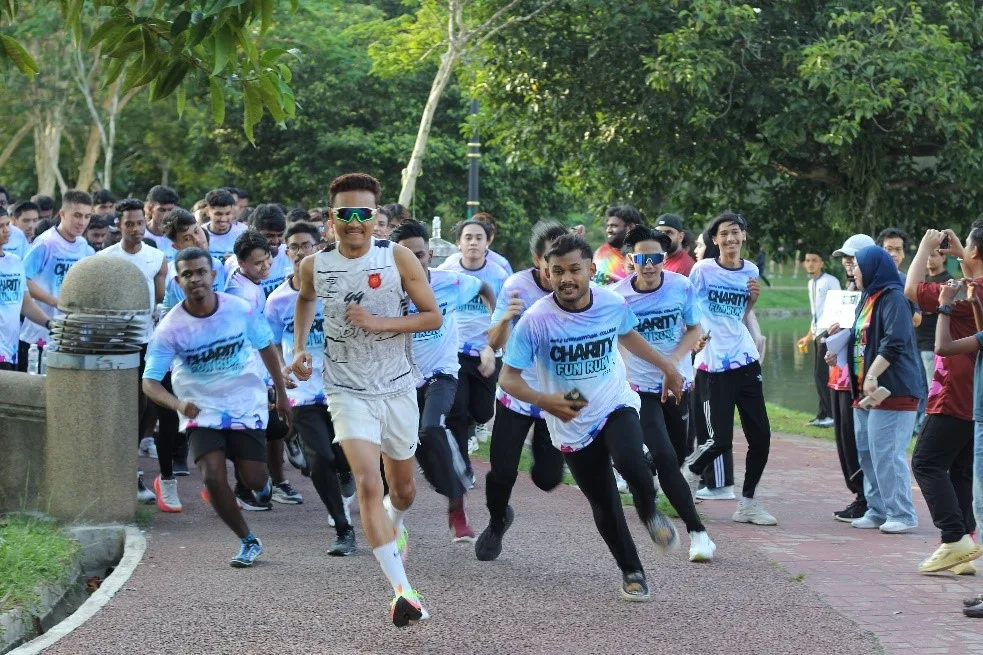
Higher education institutions play a vital role in developing graduates who are not only academically competent but also socially responsible, physically healthy, and actively engaged with their communities. Co-curricular activities that combine health promotion, community service, and charitable initiatives provide students with opportunities to develop essential life skills beyond the classroom. One such initiative is the Charity Fun Run 2025, organised by Goon International College in collaboration with Dewan Bandaraya Kuala Lumpur (DBKL) and Yayasan Pembangunan Generasi Baru Malaysia. Held on 25 May 2025 at Taman Tasik Permaisuri, Cheras, the programme attracted 1,679 participants, including students, staff, and members of the public. The event was designed to promote healthy living, encourage community participation, and raise funds for charitable causes while supporting the college's Corporate Social Responsibility (CSR) initiatives.
One of the programme's primary objectives was to encourage healthy lifestyle practices through recreational physical activities. Physical inactivity has become an increasing concern among young adults due to sedentary lifestyles and technological dependence. The Charity Fun Run provided participants with an enjoyable platform to engage in physical exercise while promoting awareness of the importance of maintaining good health. Activities such as the charity run and Zumba fitness session encouraged participants to improve their physical fitness in a supportive and enjoyable environment. These activities also served as effective stress-relief opportunities, allowing students and staff to balance academic responsibilities with physical well-being. By incorporating exercise into a community event, the programme successfully demonstrated that health promotion can be both meaningful and enjoyable.
Beyond promoting physical wellness, the programme successfully fostered social responsibility through charitable engagement. The event aimed to raise funds that would be channelled towards charitable organisations and welfare projects supporting individuals in need. Participants were encouraged to recognise the importance of contributing to society while developing empathy towards underprivileged communities. The donation handover ceremony symbolised the programme's commitment to giving back to society and reinforced values such as compassion, generosity, and civic responsibility. Through active participation in fundraising activities, students gained a deeper appreciation of community service and the positive impact that collective efforts can have on improving the lives of others.
The Charity Fun Run also provided valuable opportunities for students to develop essential soft skills. Throughout the programme, participants and organising committee members were actively involved in event planning, registration, crowd management, logistics, and volunteer coordination. These responsibilities enhanced students' communication, teamwork, leadership, problem-solving, and organisational abilities. Working collaboratively with peers, staff members, and external agencies enabled students to experience real-world event management while strengthening interpersonal relationships. Such experiential learning opportunities complement formal academic education by preparing students with transferable skills that are highly valued in future workplaces.
An important factor contributing to the programme's success was the collaboration between Goon International College, Dewan Bandaraya Kuala Lumpur (DBKL), and Yayasan Pembangunan Generasi Baru Malaysia. These partnerships strengthened the programme by combining institutional resources, expertise, and community networks. Collaboration with external stakeholders enhanced the programme's credibility while expanding its reach beyond the college community. Furthermore, such partnerships demonstrate how higher education institutions can work together with government agencies and non-governmental organisations to organise impactful community-based programmes that benefit both students and society. The programme therefore served as an excellent example of effective multi-stakeholder collaboration in achieving shared educational and social objectives.
The programme also demonstrated strong alignment with several United Nations Sustainable Development Goals (SDGs). It contributed to SDG 3 (Good Health and Well-being) by encouraging active lifestyles and promoting health awareness among participants. The programme supported SDG 4 (Quality Education) by developing students' life skills, teamwork, and civic values through experiential learning. It also addressed SDG 10 (Reduced Inequalities) by raising funds to support underprivileged individuals and charitable initiatives. Furthermore, the use of a public recreational space encouraged community participation, supporting SDG 11 (Sustainable Cities and Communities), while collaboration with DBKL reflected the principles of SDG 17 (Partnerships for the Goals). These contributions illustrate how community service programmes can simultaneously advance educational outcomes and global sustainability objectives.
Despite the programme's overall success, several operational challenges were identified. Time management during scheduled activities, coordination among volunteers, and participant movement during registration and post-run sessions presented organisational difficulties. These challenges highlighted the importance of comprehensive event planning, clear delegation of responsibilities, and effective communication among organising committee members. Addressing these issues through improved scheduling, volunteer training, and participant management strategies would contribute to smoother implementation of similar programmes in the future.
The programme report also provided several recommendations for future improvement. These include strengthening planning and coordination by assigning clearer responsibilities to organising committee members, improving time management throughout programme implementation, and enhancing participant flow to ensure efficient event operations. Implementing these recommendations would improve the overall participant experience while increasing the effectiveness of future charity events. Continued collaboration with external agencies and greater student involvement would further strengthen the programme's long-term impact on community engagement and student development.
In conclusion, the Charity Fun Run 2025 successfully achieved its objectives of promoting healthy lifestyles, encouraging social responsibility, supporting charitable causes, and strengthening collaboration between educational institutions and community organisations. The participation of 1,679 individuals reflects the programme's strong appeal and positive community impact. Through its combination of physical activity, fundraising, volunteerism, and experiential learning, the programme contributed significantly to students' personal development while fostering stronger relationships between the college and the wider community. The programme serves as an excellent model of holistic education that integrates health promotion, community service, and social responsibility. Continued implementation of similar initiatives will further develop socially responsible, physically active, and community-oriented graduates who are prepared to contribute positively to society.