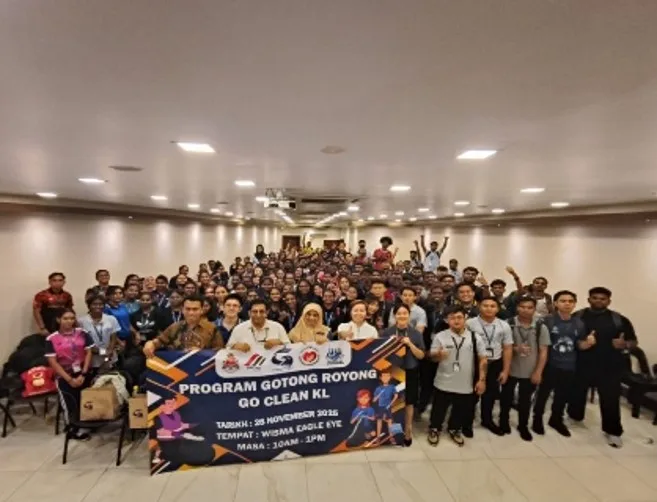
PROGRAM GOTONG ROYONG GO CLEAN KL
Environmental sustainability and community cleanliness have become increasingly important in addressing the challenges associated with rapid urbanisation, waste generation, and declining public awareness of environmental responsibility. Educational institutions play a significant role in cultivating environmentally responsible citizens by providing opportunities for students to engage in meaningful community service activities that promote sustainable practices and civic responsibility. In line with this objective, Goon International College successfully organised the Program Gotong Royong: Go Clean KL on 28 November 2025 in collaboration with Dewan Bandaraya Kuala Lumpur (DBKL) as part of its Corporate Social Responsibility (CSR) initiatives. The programme aimed to enhance students' awareness of environmental cleanliness, encourage active participation in community service, and foster a sense of responsibility towards maintaining clean and healthy public spaces. Held at Wisma Eagle Eye, the programme attracted 416 college students, reflecting a strong commitment among students to participate in environmental conservation and volunteerism. The programme commenced with registration and safety briefings conducted by organisers and DBKL representatives, followed by structured gotong-royong activities that involved waste collection, sweeping, general area maintenance, and proper waste segregation practices. Through these hands-on activities, participants gained practical experience in environmental stewardship while developing essential values such as teamwork, discipline, cooperation, and civic consciousness. The involvement of DBKL provided participants with professional guidance on effective waste management, recycling practices, and environmental sustainability, enabling students to better understand the importance of preserving public spaces for the well-being of the wider community. Beyond improving environmental awareness, the programme also strengthened collaboration between Goon International College and DBKL, demonstrating how partnerships between educational institutions and local authorities can effectively support community-based initiatives. Furthermore, the programme contributed to the achievement of several United Nations Sustainable Development Goals (SDGs), including SDG 3 (Good Health and Well-being) by promoting a cleaner and healthier environment, SDG 11 (Sustainable Cities and Communities) through the maintenance and preservation of public spaces, SDG 12 (Responsible Consumption and Production) by encouraging responsible waste management and waste segregation practices, and SDG 17 (Partnerships for the Goals) through strategic collaboration between the college and DBKL. The programme also produced significant educational benefits, as participants developed important soft skills such as communication, leadership, problem-solving, teamwork, and interpersonal collaboration while working collectively to achieve common environmental objectives. Although several challenges were encountered during programme implementation, including coordinating a large number of participants, ensuring equitable task distribution, managing time efficiently, and adapting to weather conditions and site limitations, these challenges provided valuable learning opportunities for organisers to improve future programme planning and execution. The successful implementation of the programme demonstrated that experiential learning through community engagement can effectively promote long-term behavioural change by encouraging students to adopt environmentally responsible practices in their daily lives. Overall, the Program Gotong Royong: Go Clean KL successfully achieved its objectives by increasing environmental awareness, strengthening community engagement, promoting sustainable practices, and fostering a culture of volunteerism among college students. The programme highlights the importance of collaborative CSR initiatives in nurturing socially responsible, environmentally conscious, and community-oriented graduates who are prepared to contribute positively towards sustainable development and environmental preservation within their communities.